


September 2024: The car in question is a North American spec 76 converted from single Stromberg to twin HS SU. Some of the problems could be attributed to vaporisation which many say is the cause of hot-starting issues but he has another, earlier, model also with HS SUs and that does not have the problem. This makes makes him an ideal candidate to back my contention that hot-start problems are not generic to the MGB but due to the specifics of a particular car. Every summer this problem comes round and this year was no exception, despite adding heat insulation to the float bowls, fuel lines in the engine compartment, stainless steel heat shield, and others. Note that while insulation can delay how quickly things heat up ultimately they will reach the same temperature as uninsulated.
He is determined to find and fix the cause, and I'm equally interested as hopefully it will help others with the same problem. But one of the difficulties in remote diagnosis is that it's only when Bill thinks to mention something that I can get a light-bulb moment. A case in point was when we were investigating the emissions control system his car has with the carb vents/overflows piped to the charcoal canister, when he mentioned that on removing the hose from the front carb there was liquid fuel in it. Never mind 'light-bulb' but a battery of flood-lights suitable for a football pitch! There should never be fuel from the vent as that indicates there is or has been an overflow, and with the jet and bridge at a lower level than the vent port fuel must be coming from there and running into the inlet manifold as well - exactly my theory of flooding and not fuel starvation as the cause of hot-starting problems. The question is what caused that overflow, and I think this is the reason.
We agreed he should check the float heights, but he chose to replace them with adjustable StayUp and new float valves. Not something I would have done as changing things can cause other problems (as happened in this case) .
The most obvious test if you suspect the float valves is to turn on the ignition but not start the engine - removing the wires from one of the coil spade terminals first to prevent the coil overheating (some electronic systems don't need that but best to be on the safe side) - and timing the clicks which once the float chamber has been topped-up shouldn't be more than once every 30 secs. This is to check seepage through the float valves as they wear. Slower than once every 30 secs is fine as that is less than the consumption at idle so the fuel level won't rise and flood no matter how long it is left. More frequently than that and more fuel could be seeping in, which will raise the fuel level and make the mixture richer, which will affect the idle speed as well as eventually overflow. Bill did that and reported that it clicked six to eight times, then started chattering away ten to the dozen at which point he switched off. Six or eight times in 30 secs is way too much, never mind the chattering. I asked him to do it again with the overflow hoses removed from both carbs and to watch and listen, only switching off if fuel started to flood out of one of the carbs.
He did this test after changing the floats and valves, and this is the main problem with remote diagnosis - it was only because he had sent me a video this time that I realised the situation was far far worse than I had believed. The six or eight click he mentioned were as soon as he switched on for a start, which would be fair enough if the car had been standing for some time. But it was every time he switched on, even when it had been turned off then immediately turned back on again (see first section of the video here). There had been suspicions about a Hardi pump not working correctly and when he sent me pictures it had been fitted incorrectly with both ports facing straight down, which traps air and causes the pump to click more frequently than it should, as had been the case with local pal Geoff. Rather than move the pump, which had been installed in a different place anyway, he decided to go the whole hog and fit a new SU in the original location and eliminate the pump as a cause altogether, with strict instructions from me as to how it needed to be orientated i.e. with the outlet port above the inlet so it can purge itself of air. Another thing I noticed in a photo was a fuel filter between tank and pump which also raised a red flag (Why? What problem was it intended to solve?). Back to the video, he started the engine a number of times and on two occasions the initial idle had a stumble and needed a rev to get it to stabilise at about 900-1000 rpm, which seems to be needed with modern fuel. Previous videos had shown the idle at barely 500-600 which I think is too low, but he hadn't altered the idle screws - more indications of mixture problems when there is the low idle.
As if that wasn't bad enough he sent me another video with the ignition on, engine not running, and the pump was clicking away exactly as if it were pumping fuel, but with nothing coming out of the vents. It was either going onto the floor (which it wasn't), it couldn't have been pumping out of the jets at that rate with the pistons fully down and it was going for several minutes, which left only one thing - the pump itself, in the shape of the non-return valve in the inlet stuck open so the diaphragm was repeatedly sucking the same fuel from the tank and pushing it back again. Dirt in the valve? Remember that filter between tank and pump? It's still there with the new pump and a picture of the fuel level in the float chamber also showed what looked like debris at the bottom despite a fuel filter in the engine compartment as well. He is going to clean that out, then we will have to watch for it coming back. Chattering can also be caused by air in the pump or pipe to the carbs (slack input hose connections? Perforated pick-up pipe inside the tank?) when the float valves are fully closed, but that should never happen after the engine has been run without disconnecting hoses or pipes. Another day showed just a few clicks when switching on, and the 'debris' turned out to be marks in the casting and not bits so the test will have to be repeated.
The next test to conclusively prove the 'continual chattering' problem (if it happens again) to the pump and not the carbs is disconnect the fuel feed from both carbs and block it, then repeat the 'ignition on not started' test. Now there should be no fuel flow at all, only reverse seepage from the one-way valve in the pump, and there could be many minutes between clicks of the fuel pump.
Bill sent me three more videos. The first is a delivery check i.e. the carb feed to the front carb removed and directed into a container - and the result was shocking, proving that a video (to update the adage (all adages are 'old' by definition)) saves a thousand words. Turning on the ignition the pump was chattering away like billy-oh, with only fits and starts of fuel coming out, and very discoloured. It took 20 seconds before the pump settled down to a more normal rate with continual pulses of fuel, noticeably cleaner, and no obvious bubbles. This video has an example of the frequent clicking at switch on which shouldn't happen unless the ignition has not been on for a week or more (clip repeated three times) in the first section, and the delivery check in the second section:
The second video was with the feed into the container blocked off and the pump clicked about once every 10 secs - three-times more frequently than the 30 seconds minimum between clicks it is supposed to be. The third video was with the feed connected back up to the front carb, more clicks than would be normal turning on the ignition but then the hose had been off the carb. When that stopped clicks every 10 secs as before. So either the rear carb float valve was seeping in videos 2 and 3 and the front carb not contributing to it in video 3, or the float valves are OK and it is the one-way valve in the pump that is seeping back. The first question is why the fuel was so discoloured at the start of video 1 - as it ran clear shortly after then that can't be coming from the tank, so it must be occurring as it is sitting in the lines and the pump when parked up. Pipes? Hoses? The second question is why it is taking 20 secs to start delivering fuel properly - chattering away like this indicates there is no fuel in the pump and it was having trouble pulling it from the tank. Air leak on the inlet side? Pump banjo/bolt incompatibility?
At another switch-on to take the car for a good hard run the pump chattered away for 20 secs and showed no sign of stopping so he started the engine anyway. Just after that the chattering slowed from very rapid (as at the start of the delivery check in the above video) when no fuel was coming out, to regular pulsing (when it was in full flow), then stopped. I've had that myself after having disconnected and reconnected things at the pump. So I'm convinced that, somehow, his pump is emptying while parked i.e. air is getting in from somewhere. On his return from the 'good hard run' there was again liquid fuel in the carb vent hoses, so he still has the overflowing/flooding problem as well.
We keep going, the 'chattering' symptoms i.e. lack of fuel reaching the carbs would seem to be opposite to those needed for hot-start problems i.e. flooding, but he still has the latter as well. You never know, when we find and fix the chattering issue the flooding issue may get worse and be easier to find! Hope springs eternal (but hopefully not pushing fuel into the inlet manifold ...).
October 2024: In an effort to get to the bottom of Bill seeing liquid fuel in his overflow hoses I've more than once asked him to do an 'ignition on engine not started' check with the hoses off the carb overflow ports. Since from the above video it became obvious how useful a video can be in remote diagnosis I've also asked him to film the test. The test needs the wiring to be removed from one of the coil spades to prevent that over-heating with points and some electronic ignition systems (but best to remove it on all cars to be sure). The object of the exercise is to time the clicks from the fuel pump, and watch the ports for any fuel appearing. The clicks should not be any more frequent that once every 30 secs (after an initial few depending on how long the ignition has been off) in any event as that does mean that either fuel is seeping past the float valves (or the non-return valve in the pump inlet is leaking back). Even where the clicks are more than 30 secs apart it could mean that feel is seeping past the float valves, but in normal use i.e. engine running even at idle it should still be using more than that i.e. it will never overflow. However for whatever reason that hasn't happened so far. Instead Bill replaced both floats and valves in both carbs but still had the same issue and wondered if it could be a faulty float chamber lid which of course it could be and was already in my mind. He ordered a 2nd-hand lid for the front carb, but had also been asking the chap he bought the floats and valves from what could be wrong and sent his lids off to him to have a look at. He said both had damaged tips and he had replaced them and was returning the lids.
As I mention at the outset he has two MGBs with twin HSs and the other one hasn't had any problems of this nature, which surely indicates very strongly if not proves that his issues at least are down to this specific car and are not generic. However he has had a major fire at home where the earlier car was destroyed and the 76 damaged which brought any further testing and diagnosis to an end, with no resolution.
January 2026: After a long delay due to the fire we have picked up the baton again. He sent the StayUp floats and lids to a specialist who weighed the floats and found one was 7.8gm and the other was 14.5gm - obviously something wrong somewhere. Testing various StayUp and standard floats the average came out at about 7gm for both. So two new floats were fitted by a local workshop and various testing indicated that problem had been solved.
April/May 2026: Except it hadn't. After the carb floats were found with vastly different weights they were replaced - but no change. A British car mechanic found the pump pressure at 4psi which is on the high side so fitted a pressure regulator set to 3psi. Early indications are that overflow is still occurring but on just one carb now, so there is still some issue with floats and valves as 3psi should be fine but we are also looking at possible issues with the North American canister system. He has early HS4s used before the canister system (on what was originally a Zenith-equipped car) and the British mechanic was of the opinion that you can't mix and match and he should vent/overflow down the side of the engine as per earlier practice. I can't see the difference as both systems should be venting to atmosphere albeit the early system directly through pipes hanging down and the later via the canister (and anti-runon valve in this case). One theory has it that the PCV system crankcase vacuum continually drawing fresh air through the canister to purge it is sucking fuel out of the float chambers via the overflow. But the rocker cover has a restriction hence a very small air flow and everything beyond that i.e. canister, tank and float chambers should be at atmospheric pressure - and in any case if that's the cause "why don't they all do it?".
However there could be something wrong with his system somewhere i.e. a blockage or excess vacuum so he is currently trying plain hoses down the side of the engine ... and the first results from that is one of the hoses still has fuel in it after a run! which points the finger back at pump pressure, float and valve. And then from a new video it becomes immediately apparent that there is a bad misfire when sharply opening the throttle - regular beat so possibly one carb not delivering fuel and yet another issue:
I suggested removing the air cleaners and watching both pistons as the throttle was opened smartly to see if they moved differed, as well as with engine off and at idle.
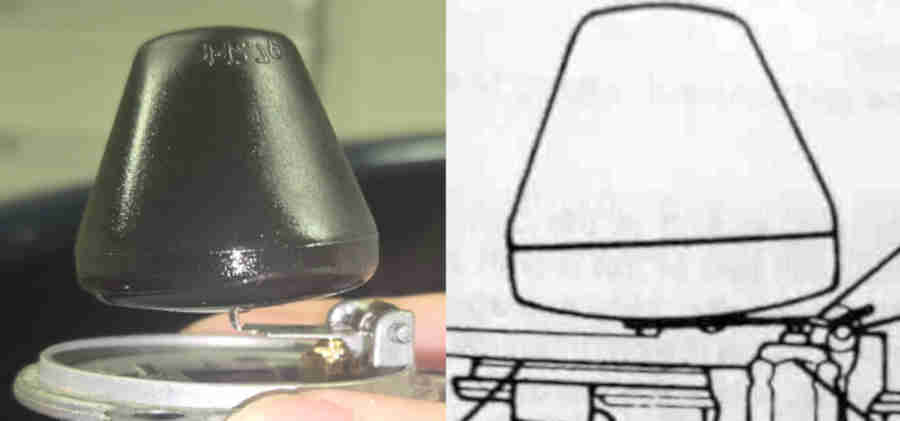 However he decided to take it to the British car mechanic who reset the floats to 1/8" as he considered they were too high. Bill had sent me this picture of one of his float lids, and to me the distance between the float arm and the lid is at best parallel and possibly increasing as it goes from pivot to float whereas a drawing from SU shows it decreasing. Now photos are difficult to interpret and drawings are not always dimensionally accurate but to me a float with an increasing distance will result in a lower float and hence fuel level than one with a decreasing distance i.e. potentially the SU float will give a higher fuel level than Bill's.
Blipping the throttle one carb piston wasn't moving due to a badly centred jet so the needle was binding. Recentering solved that but showed rub marks on the needle so strictly speaking that and the jet should be replaced - and probably both to keep them the same. But best to run with it for a while to avoid changing too many things at once.
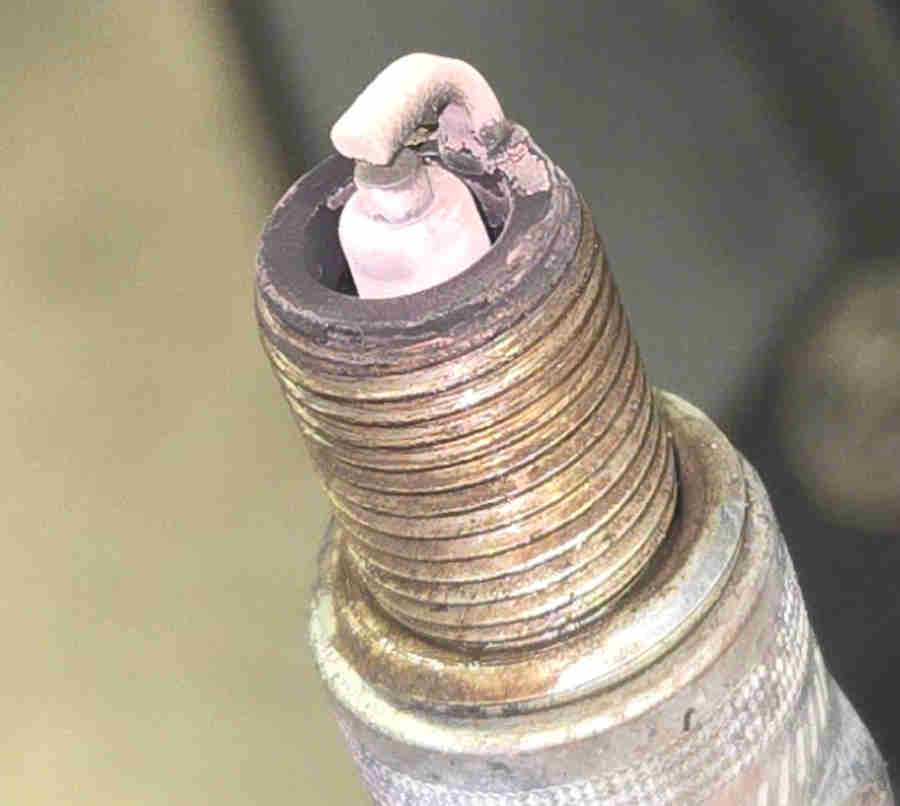 All plugs showed very weak, jet depths checked and found to be quite a bit out so reset to 0.085" (or 0.090", he's not sure which) but information on what they were to start with is not clear. Reset the mixtures and air-flow balance. Valve clearances 'didn't sound right' so they were checked, one found 'very large' and reset as well.
It was immediately apparent that pickup was miles better with no hesitation as previously. Bill wanted to put the canister hoses back on the overflows but I strongly advised he stay with the plain hoses for the time being so he could check for overflows more easily. I wanted him to put small containers under each and check them before and after each run but not done yet.
The mechanic also advised that the mushroom PCV be moved from the front port on the inlet manifold to the middle port, where the servo hose was attached, so the crankcase suction was balanced between the carbs. I agreed solely on the basis "that's how they were originally" but feel it would make very little difference if any to running.
He also recommended that the non-vented oil filler cap be replaced with a vented saying "Because the only air entering is through a VERY small hole in the valve cover nipple to canister hose. A vented cap will allow more air if/when needed." Yes it would, but more air should never be needed, and by increasing the air flow into the inlet manifold it would act like a vacuum leak and upset the mixture balance across the throttle range. But see this on the anti-runon valve that Bill has which supplies additional air to the inlet manifold anyway. He also said "Again, all MG engines that used PCV had vented fill caps" which is incorrect. Before PCV all caps were non-vented and the only arrangements for ventilation were a hose from the rocker cover to the front air-cleaner can and another hose from the front tappet chest cover dangling down past the engine with an open end. When PCV came in the caps changed to vented and were the source of air to ventilate the crankcase. Non-North American spec stayed that way for the rest of production but when North American spec got the charcoal canister they reverted to a non-vented cap as the canister was now the source of air to purge the canister of fumes and ventilate the crankcase, and stayed with that until the end of production. More on crankcase ventilation here.
Finally the servo hose is actually heater hose with the ends cracking a bit. Not only could heater hose collapse under the vacuum but cracked ends could be letting in air and creating a vacuum leak. The mechanic recommended replacement using "power steering hose or similar", but probably best to get pukka servo hose from one of the usual suspects, which may need the carb mixture resetting.
So a number of problems found and hopefully fixed and now it's a case of doing some decent running and see how it goes. Even if the hot-starting, stalling and overflow issues have been resolved I can't see the work that has been done resolving the earlier issues of excessive pump clicking.
End of May:
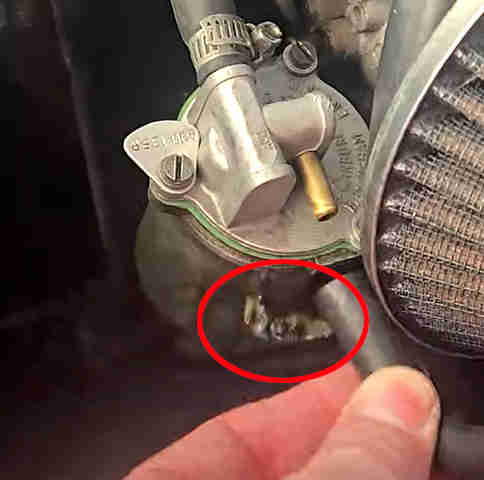 As it happens the starting and overflow issues continue. Pulling the carb vent hoses off immediately after a run they show fuel (circled in red in the attached) and the car is difficult to start. As it happens he had put the canister hoses back on but this time using longer hoses at the carbs and a short one at the canister so the tee is by the canister (originally the tee is by the carbs) which does seem to confirm the problem is associated with the canister system - but how?
He then disconnected the hoses at the tee but left them on the carbs, had a run and removed them from the carbs and ... no fuel. Not only that but no hot starting issue either. These are 'single events' when really several runs alternating the two arrangements need to be done to get confirmation.
I said that short of defects I couldn't see how connection to the canister could be causing the problem, because apart from at the instant of switch-off when the anti-runon valve operates the canister and its plumbing, tank and carb float chambers should basically be at atmospheric pressure with the anti-runon valve at the bottom of the canister being open to atmosphere. In order for the crankcase ventilation suction from the rocker cover to suck fuel out of the float chambers then the canister would have to be blocked - or the anti-runon valve as that is the source of fresh air to the canister. Bill then made a comment that a long time ago he had taken the car to someone who found the rocker port blocked and drilled it out, he thought to a larger size than they were originally. That would create more suction on the canister and the rest of the plumbing - raising the possibility that it could pull enough fuel back from the jet to raise the fuel level to the vent ports during switch-off when the anti-runon valve cuts off the supply of fresh air and some level of manifold vacuum develops in the canister and the carb vent hoses.
That could well explain the signs of fuel at the vent ports at switch-off, but how about the difficult hot-starting? The anti-runon system works by pulling fuel back from the jets into the float chambers at switch off, so maybe if the vacuum was still present in the canister, plumbing and hence float chambers the problem could be fuel starvation rather than flooding. Any remaining vacuum should dissipate at the very least when the anti-runon valve releases opening the path to fresh air to the canister even though the valve can take a couple of seconds to release (with an audible click) when oil pressure dies away. But Bill removed the vent hoses immediately after a run and immediately before a hot start, so if nothing else that should allow any vacuum in the canister and certainly the float chambers to dissipate and fuel to run back into the jets, so there should be neither fuel starvation or flooding - unless something was causing the carbs to run very rich before switch-off. In the mean time Bill phoned John Twist to ask about the rocker cover port who (along with a couple of other internet sources) confirmed that it should be 5/32" and oversize could suck fuel out of the jets (!), Bill checked his with a twist-drill and confirmed his is 5/32", so excessive suction (via that route) isn't the cause anyway.
To complicate matters there is a second source of suction to the canister system. This is a hose from a port on the inlet manifold to a second side port on the anti-runon valve. Both ports and hose are small bore but the source being the inlet manifold the level of suction from that will be much higher than that from the carbs via the rocker cover. The other strange thing is that this small port is open at the valve all the time - operated or released. When the valve is released (i.e. normal running) it is pulling air in from the valve inlet so acting as a vacuum leak at the manifold. When the valve operates (i.e. moment of switch-off of a running engine) the inlet of the valve is closed so this additional vacuum is applied to the upper part of the valve and hence the lower part of the canister, and from there to the carb vent hoses. This additional suction is probably what is needed to suck the fuel out of the carb vents, but the curious thing is why it's not blocked off when the valve is released.
But as connection of the canister seems to be the cause of visible fuel at the carb vents at least Bill has now embarked on a series of tests disconnecting each canister hose (i.e. tank, inlet manifold, carb vents and anti-runon valve) one at a time, then running and testing for fuel and hot-start problems each time, to see how the visible fuel and difficult starting symptoms change. There is also the question of is there visible fuel at the vents if the hoses are pulled off with the engine still running, or having replaced them then switching off is it only visible then?
Early June: One of the things Bill has tried is removing the wires from the anti-runon valve and with just two comparative runs he had fuel at the carb ports with it connected and with it disconnected he didn't. But like I say just one run each way so too early to be sure. Although Bill's car has been retrofitted from single Zenith to twin SUs North American spec had SUs with the anti-runon valve for two years, albeit HIFs instead of HS4 but I wouldn't have thought that would make a difference ... but see the next paragraph.
More tests this time checking the overflow hoses both before switching off and after - and on both occasions there was none before but there was after, so the anti-runon valve is definitely sucking fuel out of the float chambers. I wrote above that basically the HSs shouldn't be any different to HIFs, but then I realised the HIF float chamber is a lot bigger than the HS, so sucking fuel back from the jet won't raise the level as high in an HIF as in an HS. Added to that the HS has a jet pipe between the float chamber and jet and fuel will be drawn back from that as well, whereas the HIF has the end of the jet sitting in fuel so only what is in the jet itself will be drawn back. All of which makes me pretty sure that anti-runon system is nothing to do with the starting and running problems and the fact Bill is seeing fuel at the overflows is simply a factor of using HSs instead of HIFs.
Four more videos from Bill and he made the comment on one of them that he was doing a hot start without any throttle. Now I always use a little throttle when starting without choke - just to give it a blip enough to put the ignition warning light out - otherwise it may only stagger into life and idle slowly and a bit roughly until revved, which was exactly what Bill's was doing. Yet more confirmation that there is no substitute for hearing and seeing things for yourself. Added to that it seemed to be idling very lumpily, and in one of the clips Bill moved round to the exhaust and it definitely sounded rich to me:
Is that from a raised fuel level? I've felt for a long time that some of this might be down to the float valves being overwhelmed for some reason, despite new floats and valves, and resetting the mixture which from the plug above paradoxically seemed very weak.
As far as the fuel pump goes on one occasion turning the ignition on about 30 secs after switching off elicited about five or six clicks - more than I would have expected (mine would be one or none) - and on another occasion only a couple. But as the anti-runon system is pulling some fuel into the overflows at switch-off that will lower the level in the float chamber when the valve releases, so at the next start the fuel pump is bound to make an extra (compared to mine) couple of clicks to refresh the fuel level.
So more tests suggested, this time when it is idling lumpily to disconnect the fuel pump (the most convenient position is at the bullet connectors in the engine compartment where the white in the rear harness joins white or white/brown in the main harness ... and I strongly advise you to fit a fuse here anyway) and let it empty the float chambers, filming the exhaust note as it does so to see how it changes. Also a different version of that where the pump is disconnected but the engine is turned off after only a few seconds. That should lower the fuel level in the float chambers and clear any richness in the inlet manifold, then without reconnecting the pump see how that has affected hot starting.
So progress of a sort through elimination, but continues!
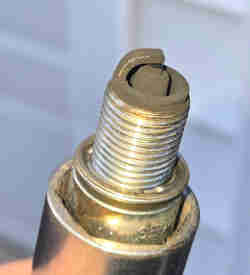 A couple of days later Bill removed two plugs (one from each carb) and they are heavily sooted, so obviously a very rich mixture as the exhaust note indicated and utterly different to their condition early in May. At that time they were found weak by a British car mechanic who also measured the jet depths and set them to 0.085" or 0.090". What they were to begin with I don't know, and neither do I know what he did from there as regards setting the mixtures. Personally I never use jet depth measurements, just two full turns down from flush with the bridge to set the starting position and from there you should be adjusting the jets by ear to give the highest idle. Use of the lifting pins after that is optional.
As Bill is not comfortable adjusting the carbs by ear he settled for weakening both by one flat and we will see what that does for running and idling. He is also going to measure the jet heights out of interest, and have a go with his Colortune. I can't get on with those for selecting the right shade of blue, but Bill says he starts off with them orange them weakens until he starts seeing blue with flecks of orange so basically Test 1 on the Gunsons chart. I remember seeing flecks of orange and flecks of various shades of blue and the problem was deciding how many of each was 'correct'! That chart is just not representative, showing as it does smooth colours, none of the blue anywhere near as 'bright' as I remember and examples show, and what it describes as 'light blue emission diminishes sharply' when I can't see any 'sharp' colour change there. The only time I found Colortune helpful is with two of them in 1 and 4 and doing Test 3 i.e. sharply opening and releasing the throttle when when comparing the colour changes and their duration is an indication of how balanced the carbs are, rather than the absolute mixture.