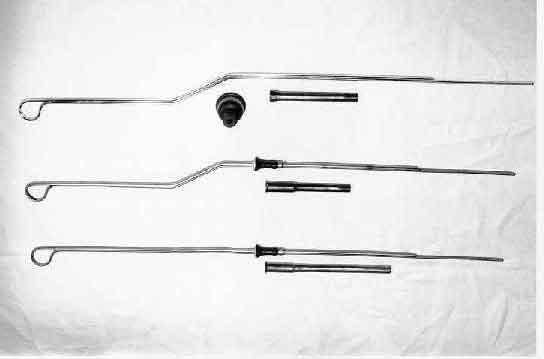
| Engine | Stick | Tube | Sump |
| 18G, 18GA | 12H74 with boot 1B1735 | 1B1063 screwed | 12H395 |
| 18GB, 18GD, 18GF | 12H74 with boot 1B1735 | 1B1063 screwed | 12H1426 |
| 18GG RWe H to 22059, 18GG RWe L to 20207 18GG We to 21267, 18GG Rc to 757 18GK RWe to 10072, 18GK We to 10951 | 12H2964 with stop | 12H2966 screwed or 12H3351 pressed | 12H1426 or 12H3541 |
| 18GG RWe H 22060 on, 18GG RWe L 20208 on 18GG We 21268 on, 18GG Rc 758 on 18GK RWe 10073 on, 18GK We 10952 on 18V581H to 1583, 18V581L to 1013 18V582H to 2592, 18V582L to 1207 18V583 to 257, 18V584/585/672/673 | 12H2964 with stop | 12H3351 pressed | 12H3541 |
| 18V581H 1584 on, 18V581L 1014 on 18V582H 2593 on, 18V582L 1208 on 18V583H 258 on, 18V779/780, 18V836 on | 12H3963 with stop | 12H3351 pressed | 12H3541 |
However the dust cover was only used on sticks for 3-main bearing engines.
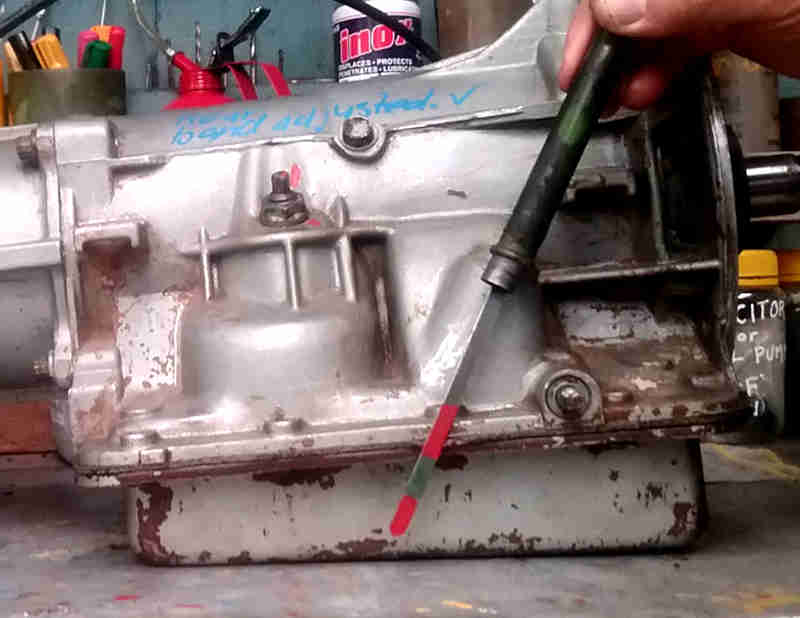
The stop on the middle and late sticks acts as a seal for both dust and the vacuum created by the PCV systems. These were first introduced while the early stick was still being used (18GA) but if the sliding seal is pushed down to the top of the tube it would have the same effect. I've wondered if the stick resting on the sump floor could rattle, and eventually wear a hole through. But if the seal were slid down an inch or so before the stick was replaced, then the stick pushed down to the sump floor so lifting the seal to the correct position, when released the resilience of the seal may well lift the stick just clear of the sump, as well as ensuring a seal.
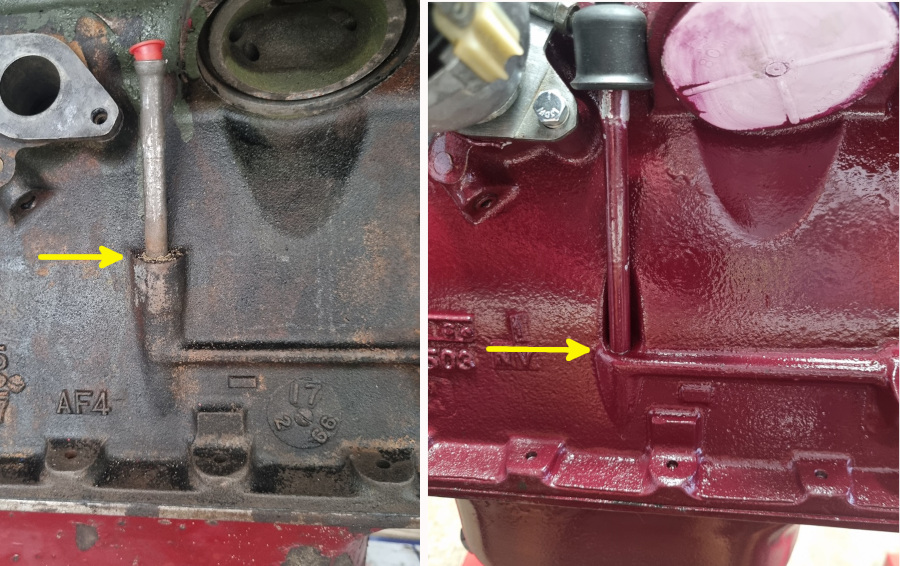
Whilst British Automotive states the short tube was used on early 18v the Leyland Parts Catalogue shows the long tube as 12H3351 for all engines 18GG onwards. This image shows a 1970 block with the raised hole i.e. an 18GG/GH/GJ/GK so a short tube would have been used, and this one a 1971 with the lower hole which would have used the longer tube. The casting number on the 71 is 12H3503 which was probably used until the end of production having been seen on a 1977 18V883 although CAM1628 has been seen on one example of a 1975. Then again the date code shows the year as '71' where as this one with a November 71 date code has the year as '1' which was the format for the rest of production. So either '71' was used at the end of the 18GG etc and '1' for 18V, which would mean that late versions of the 18GG etc. used the longer tube, or at the very least all 18V engines used the longer tube. Unfortunately the month letter is often not legible in photos.

These images of an 18V with long tube and straight stick show the oil level inside the engine: (John Holland)
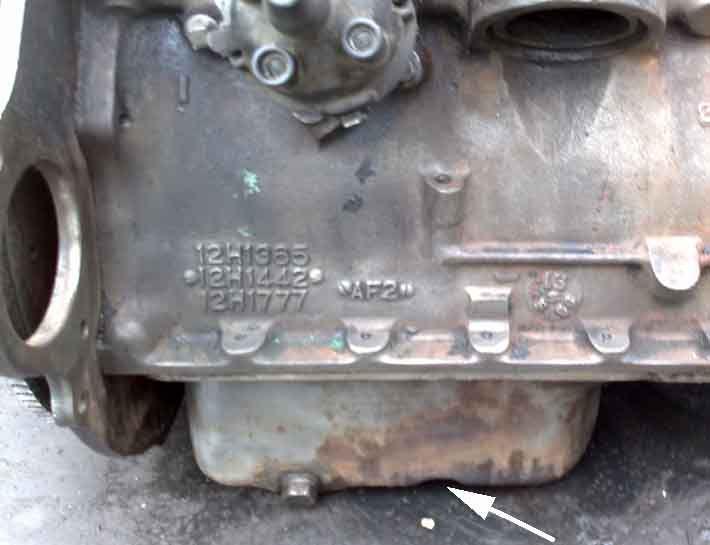
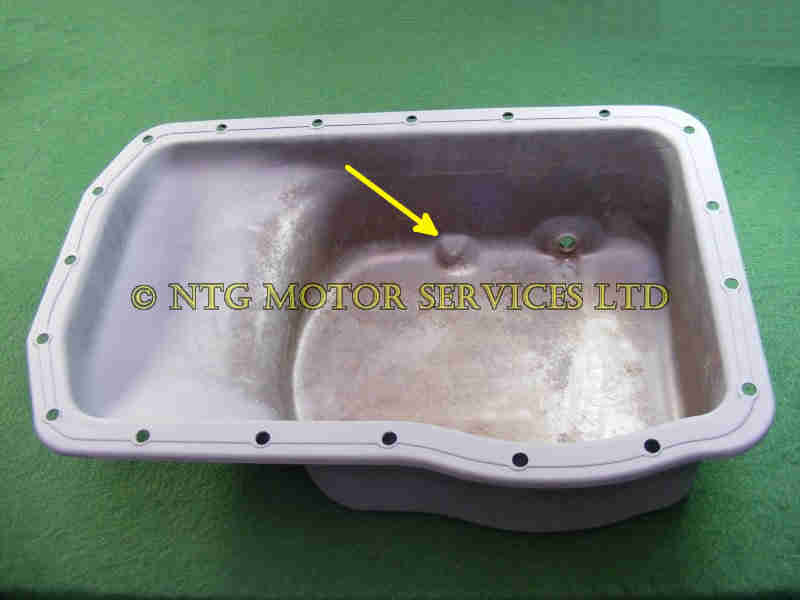
Sump plugs: Early sumps had the plug forwards of the right rear corner, the dipstick rests on a raised portion of the sump (arrowed):
Here on the 18G/GA 12H395: (NTG Services)
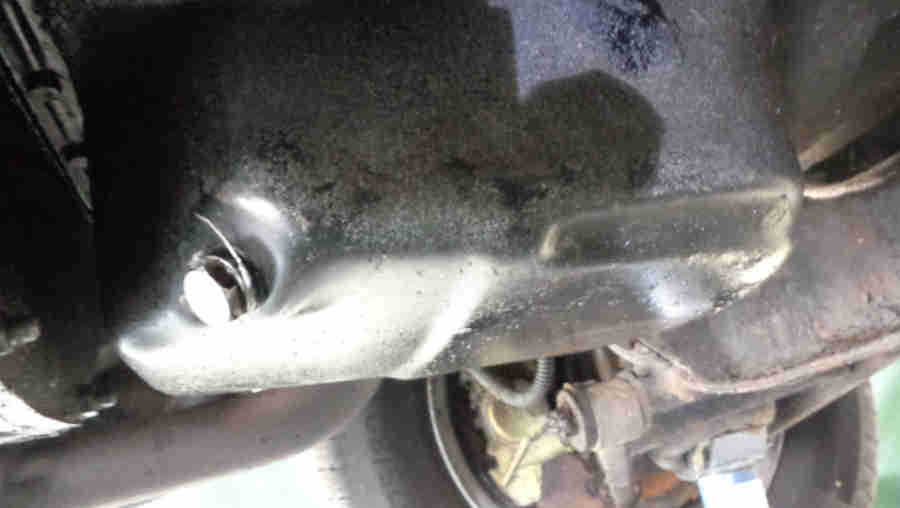
After that the sump plug was on the right rear corner and there is a 'shelf' under the dipstick instead of a short raised portion, but the dipsticks don't touch it:
Originally sump plug washers were solid copper which some say have to be re-annealed at each oil change to prevent leaks, however I've never had one drip in 55 years on multiple cars ... until changing Geoff's oil on his 78. It was only when backing that off a few turns to wrap PTFE tape round that I noticed it was very thin and ragged. Then discovered replacement washers now are crush-washers - which Geoff's obviously is - and so must be replaced every time: (Rimmer Bros)
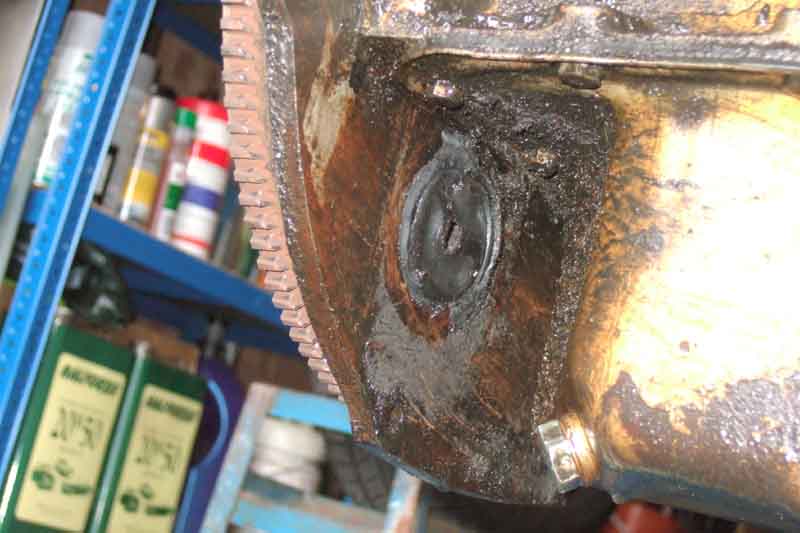
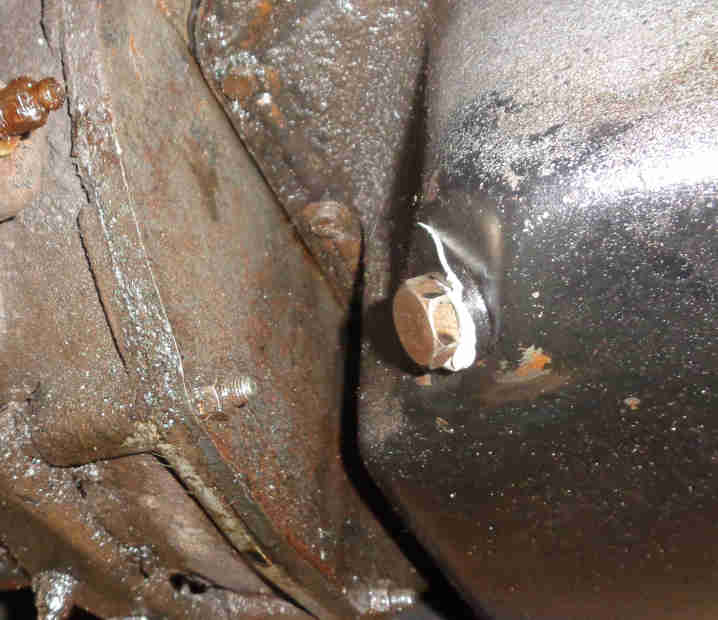
The part with the sump plug is cut away to access the torque converter bolts for the automatic gearbox via a hole in the engine back-plate, without removing the sump:
The auto was available as an option with Mk 2 cars but this style of sump may not have been available from the beginning as published information varies on what sump was used when. The Parts Catalogue only lists 12H395 for 3-bearing and 12H3541 for 5-bearing, Moss Europe lists 12H1976 for 18GB (5-bearing Mk1) to 18V797 (North America 1975 modal), and British Automotive states 12H1426 for 18GF, GH and GK i.e. Mk2 before the 18V, but I've not been able to find any detail on either of these. Clausager says a changed sump for the 18V797 "may have been introduced on North American engines from the start of the 18V836/837 series" i.e. the start of rubber bumpers. Oil capacity does not help as driver's handbook gives the change from the high volume to the lower with the 18V i.e. the 581 in August 71.
The access hole seems to have been deleted after the auto as more than one example of a later model doesn't have the plug, but the sump continued:
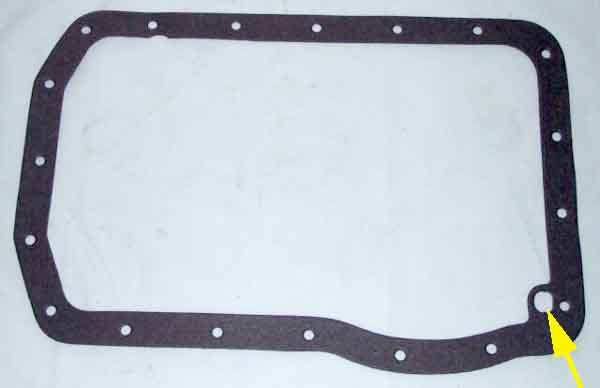
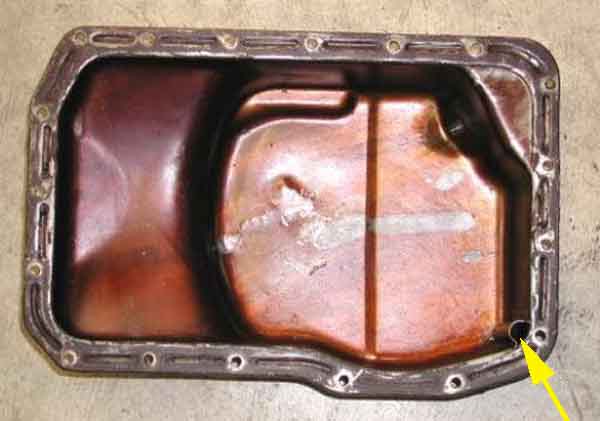
3-bearing gasket. The bolt pattern on the 3-bearing sump is different to that of the two (interchangeable) 5-bearing sumps - the 3-bearing has an extra bolt along the left-hand side which moves the front left-hand one (lower left in these images) round the corner a little way: (Chris at Octarine Services)
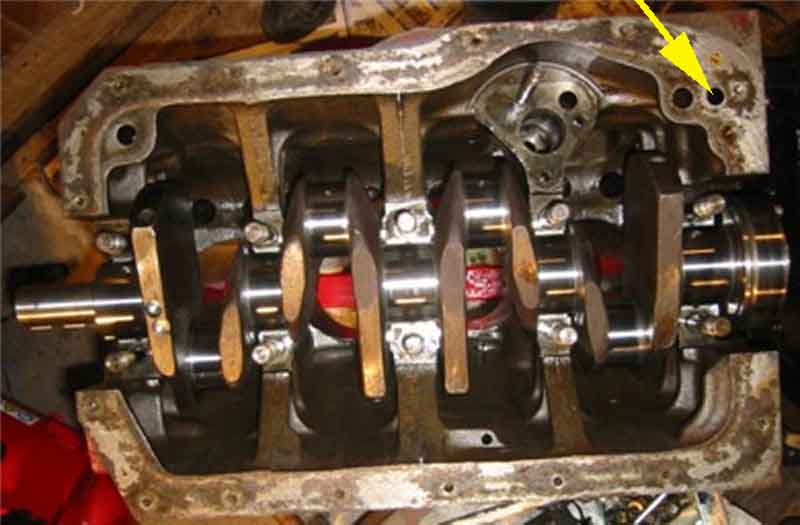
5-bearing sump. What is the purpose of the vertical 'tube' (arrowed) in the lower right-hand corner, with matching hole in the 3-bearing gasket?
There is a matching hole in the block right by one of the sump screws - overflow from the relief valve?

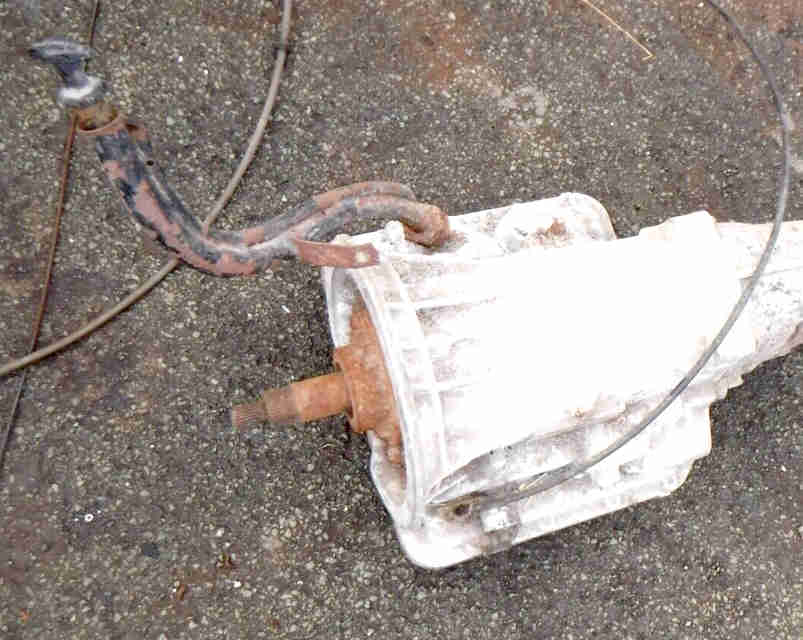
It appears to have a retaining nut that screws onto an adapter in the gearbox, similar to the oil-cooler hoses:
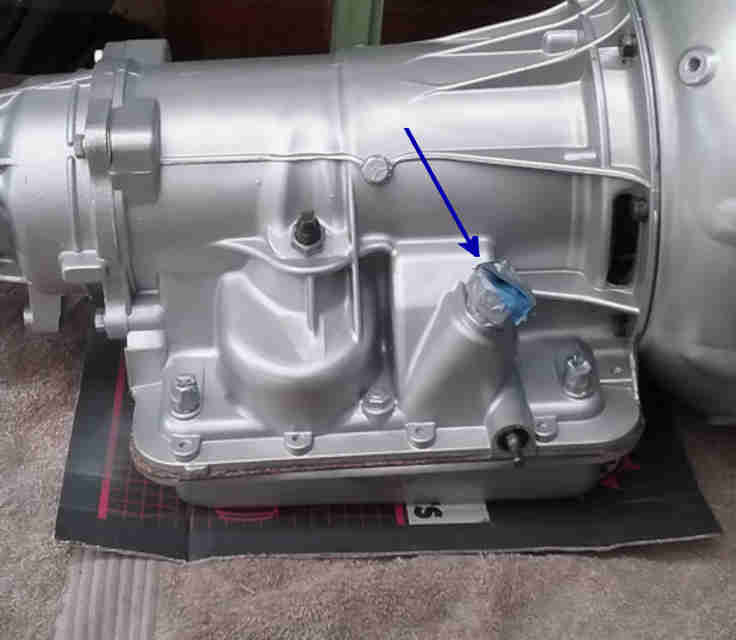
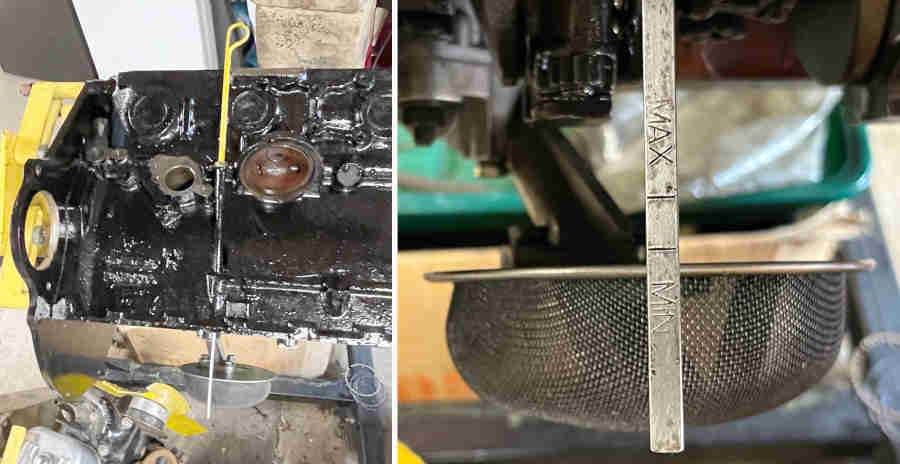
Showing the position of the dipstick in the sump: (Rover P5 Club)